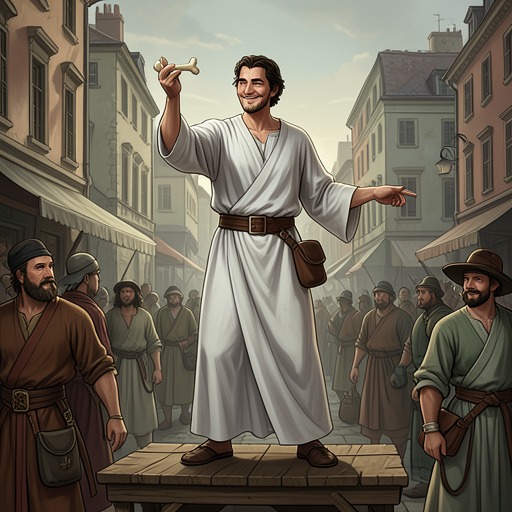
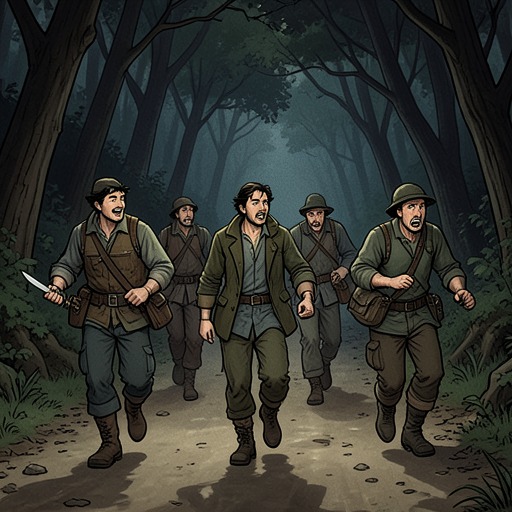
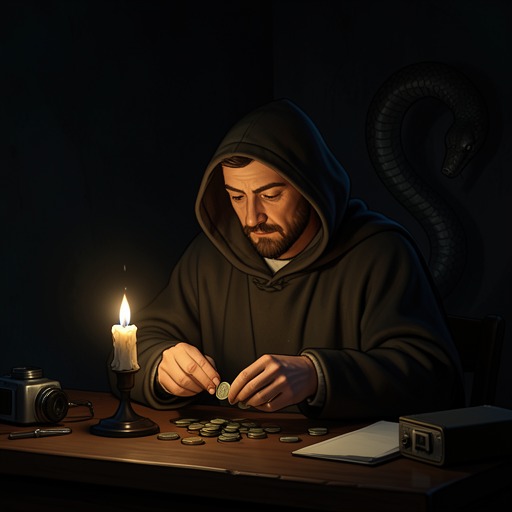
The discovery of the gold under the tree
The Canterbury TalesThe discovery of the gold under the tree is the decisive reversal in the three revelers’ quest for Death. After the Old Man directs them toward a grove where he claims to have left Death, the three men reach the tree and find a vast hoard of coined gold. Their search, apparently aimed at confronting mortality, is suddenly converted into an opportunity for possession, secrecy, and competition; the treasure becomes the material object through which their moral corruption will take visible form.
Causes and Background
The event follows the revelers’ aggressive questioning of the Old Man. They have accused him of being a thief and liar and demanded directions to Death. In response, he tells them to take a crooked way and claims that he left Death in the grove. His answer sends them away from their immediate confrontation with him and toward the tree, but the apparent guidance is already shaped by deception: the place they reach contains no visible personification of Death, only wealth waiting to expose what they value.
The Old Man’s direction therefore functions as more than a piece of practical information. It redirects the men’s violence and impatience into a new scene where their own desires can become the engine of the plot. Their expectation is a meeting with Death; the result is a discovery of gold. That gap between expectation and outcome supplies the event’s dramatic force and prepares the later conflict among the three men.
What Happens at the Tree
The three revelers run until each reaches the tree, where they find florins coined of gold, fair and bright, in a quantity that they estimate at nearly eight bushels. The scale of the hoard makes the discovery more than a lucky purse or a modest prize. It is an overwhelming concentration of wealth, large enough to require planning, concealment, and cooperation before it can be taken home.
They sit beside the hoard they have found. The physical arrangement matters: the men are no longer merely travelers pursuing a common enemy but possessors gathered around a shared object. The bright florins occupy the center of the scene, while the three companions become potential rivals. The treasure’s apparent abundance creates the conditions for distrust precisely because it seems valuable enough to divide their fellowship.
The worst of the three is the first to speak. His opening initiative establishes him as the man who converts discovery into a scheme. Although he presents himself as keen-witted even while joking and playing, his intelligence is directed toward exploiting the situation rather than toward moral reflection. The treasure does not reform him; it gives his cunning a profitable target.
Secrecy, Chance, and the Breakdown of Fellowship
The first proposal is that the treasure must be carried home by night, as cleverly and slyly as possible. Concealment is part of the plan from its beginning. The men do not consider openly reporting the hoard or distributing it according to any recognized authority. Their immediate concern is how to remove it without being detected, and the language of cleverness makes secrecy appear practical while revealing its ethical character.
The plan also requires them to remain together long enough to move the gold. Yet the speaker recognizes that the hoard cannot simply be carried away at once, so he proposes drawing lots among them. The man who draws the lot will go and obtain what is needed for their return. A device that appears impartial thus becomes the first formal mechanism for separating the companions and exposing them to suspicion. Chance is invited to decide their roles, but the treasure has already made each role morally dangerous.
The discovery consequently marks a value shift from a shared pursuit to individual acquisition. Before the tree, the three men speak as a group united by the desire to find Death. At the tree, the gold gives them a new common objective—taking the hoard home—but also introduces secrecy, calculation, and the possibility that one companion may profit at the expense of the others. Their fellowship survives only as a temporary arrangement around property.
Consequences and Narrative Significance
The hoard is the concrete instrument through which the tale’s moral logic becomes visible. The revelers have sought Death as though death were an external enemy they could locate and kill; instead, the discovery places a different form of danger before them. Gold, not a sword or supernatural apparition, changes the terms of their quest. It exposes how quickly the promise of wealth can replace their stated purpose and turn companions into threats.
The nearly eight bushels of florins also give the later plot its material stakes. Because the treasure is both immense and portable, it must be guarded, concealed, and divided. The men’s decision to carry it home by night establishes the secrecy that surrounds the hoard and makes their subsequent arrangements consequential. The scene thus operates as a discovery narrative and as the opening move of a rivalry: the object they find appears to offer shared prosperity, but it instead activates greed and prepares the three revelers’ destruction.
In the larger moral design of the tale, the bright gold is an ironic answer to the search for Death. The men reach the place where they expect to find mortality and encounter wealth that reveals the death-dealing power of avarice. Their words about finding Death are displaced by plans for possession, and the discovery under the tree becomes the point at which their own appetites begin to accomplish what their quest could not.